Let me tell you about Nadia.
She came to me not with hope — she’d run out of that a while ago — but with a kind of quiet desperation. At 28, she’d been dealing with persistent breakouts for six years across her jawline and cheeks that left dark marks before the active ones even finished healing. She’d tried prescription retinoids, acid toners, three antibiotic courses, and a 10% benzoyl peroxide gel that was bleaching her pillowcases and burning the skin around her mouth.
She wasn’t doing nothing. She was doing everything — just all the wrong things, layered on top of each other, on a skin barrier that had been compromised for so long it had forgotten what healthy felt like.
Forty-five days after we started, her coworker stopped her in the hallway and asked what she’d changed. Nadia sent me a voice note about it. She was crying — good crying.
Here’s exactly what we did.
Disclaimer
“This Blog is completely reader-supported, for any purchase you make from affiliate links on this blog we earn a small commission with no extra cost to you, This content is for informational purposes and not medical advice.”
First, Let’s Talk About Why Your Current Routine Isn’t Working
Most acne routines fail for one of three reasons.
Wrong ingredients. Your skin doesn’t need ten products. It needs the right four or five, used consistently. Overloading with actives causes irritation, weakens the skin barrier, and paradoxically triggers more breakouts — which is exactly the trap Nadia was in.
Wrong order. Layering products incorrectly renders actives ineffective and compounds irritation. Applying adapalene on a damaged barrier, for instance, doesn’t treat acne — it inflames the skin further.
Treating symptoms, not causes. Spot-treating visible pimples without addressing what’s forming underneath is like mopping the floor while the tap is still running.
Acne is rooted in four interconnected mechanisms: excess sebum production, abnormal skin cell shedding inside the follicle (hyperkeratinization), C. acnes bacterial colonization, and inflammation. An effective routine addresses all four. Most routines address one — and introduce a fifth problem: a damaged skin barrier that makes everything worse.
The 45-Day Routine: Morning and Night
The Right Cleanser (Morning & Night)
The biggest mistake I see isn’t the wrong active — it’s the wrong cleanser. Nadia had been washing her face three times a day with a heavily fragranced foaming cleanser that felt “deep cleaning” and was stripping her barrier every single use. Her skin responded by overproducing sebum to compensate. She thought she was fighting oily skin. She was causing it.
A cleanser’s only job is to remove surface sebum, sunscreen, and debris. It is not supposed to treat acne. For acne-prone skin, you want gentle, pH-balanced (4.5–5.5), and completely fragrance-free.
My recommendation:
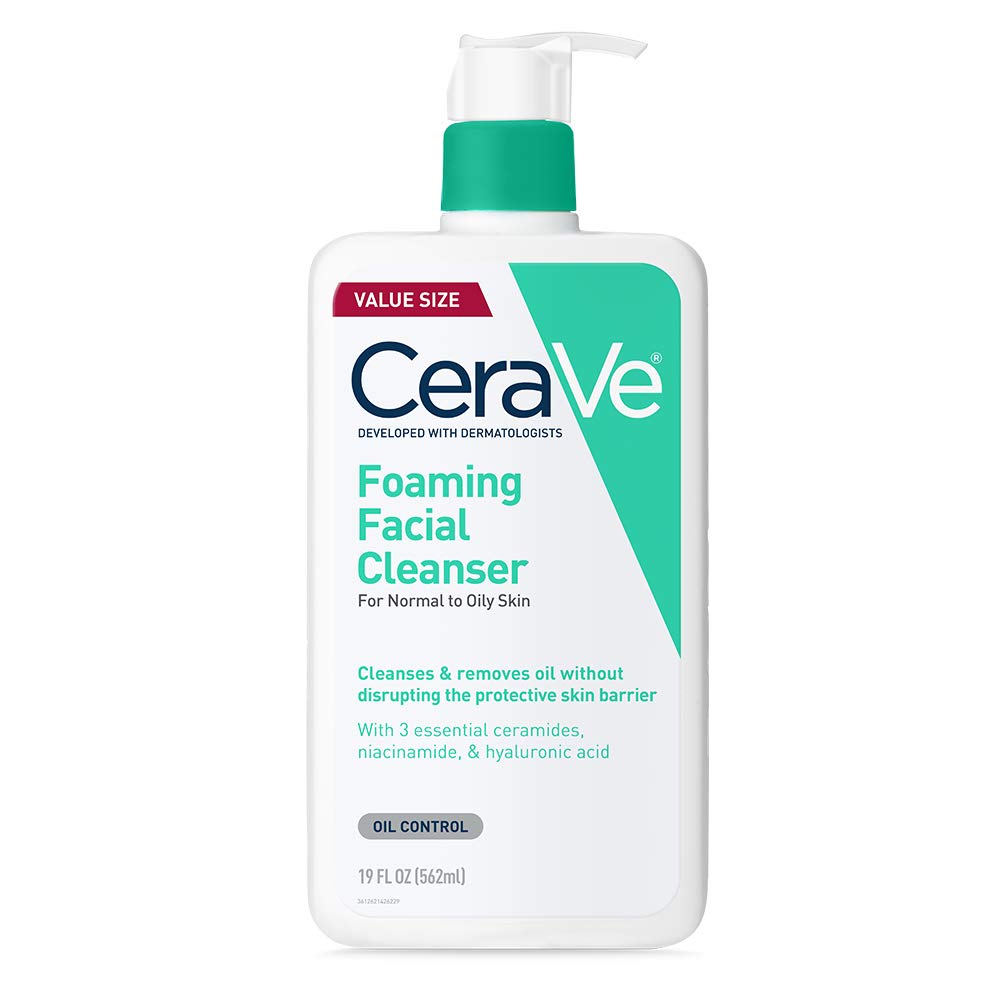
CeraVe Foaming Facial Cleanser is what I switched Nadia to — ceramides, niacinamide, and hyaluronic acid in a formula that cleans without dismantling the barrier.

La Roche-Posay Toleriane Hydrating Gentle Cleanser is exceptional for sensitive skin.
One rule I give every client: if your face feels tight after cleansing, your cleanser is too harsh for where your skin is right now.
The Active Treatment (Night Only — At Least for the First Two Weeks)
This is where the routine does its real work. I introduced actives at week three for Nadia — not day one — because her barrier needed two weeks of recovery before it could respond to them rather than react against them. That sequencing is everything.
For comedonal acne — congested skin, blackheads, persistent whiteheads — adapalene is the active that changes the game. As a third-generation retinoid, it normalises hyperkeratinisation inside the follicle, preventing the initial plug that starts the entire acne cascade. No plug means no blockage. No blockage means no bacterial colonisation. No colonisation means no inflammation. It’s the only OTC ingredient that intercepts acne at this earliest biological stage — which is why it outperforms every spot treatment long-term.
My recommendation:

Differin Gel 0.1% is what I recommended to Nadia, and it’s what I recommend to the majority of my clients.
Apply a pea-sized amount to the entire face — never just spots, because acne forms before it’s visible — on dry skin 20 minutes after cleansing. Every other night for the first two weeks of use, then nightly from week five onward. Expect mild purging in weeks three and four as the retinoid accelerates the surfacing of congestion already forming beneath the skin. This is not a reaction — it’s the process working. The clients who push through it are the ones who message me at day 45.
For inflamed acne — red papules, pustules, tender breakouts — benzoyl peroxide belongs in your morning routine. It releases oxygen into the follicle, creating an environment where C. acnes cannot survive. At 2.5–4%, it’s clinically equivalent to 10% concentrations in efficacy with significantly less barrier disruption.

PanOxyl Acne Creamy Wash 4% used as a short-contact wash is the budget pick I reach for most.

For a premium leave-on treatment, La Roche-Posay Effaclar Duo+ at 5.5% is what I recommend for moderate-to-severe inflammatory acne.
The rule that cannot be broken: never apply benzoyl peroxide and adapalene together. Benzoyl peroxide oxidises and deactivates adapalene on contact. Morning benzoyl peroxide, evening adapalene — always a full day apart.
Niacinamide Serum (Morning & Night)
Niacinamide (vitamin B3) at 10% is genuinely one of the most research-backed ingredients in acne dermatology, and it still doesn’t get the attention it deserves. It regulates sebum production at the gland level, reinforces the skin barrier, calms post-inflammatory redness, and fades post-inflammatory hyperpigmentation — the dark marks that outlast the actual acne and, for most clients, cause more daily distress than the breakouts themselves.
This was the ingredient that visibly shifted things for Nadia. The PIH across both her cheeks had overlapped for years. By day 30, it had faded more than it had in the previous two years combined. Apply it after cleansing and before moisturiser, morning and night, and give it 60 seconds to absorb before moving on.
My recommendation:

The Ordinary Niacinamide 10% + Zinc 1% is the budget recommendation — the zinc addition further regulates sebum, it’s fragrance-free, and it’s one of the most effective affordable serums available.
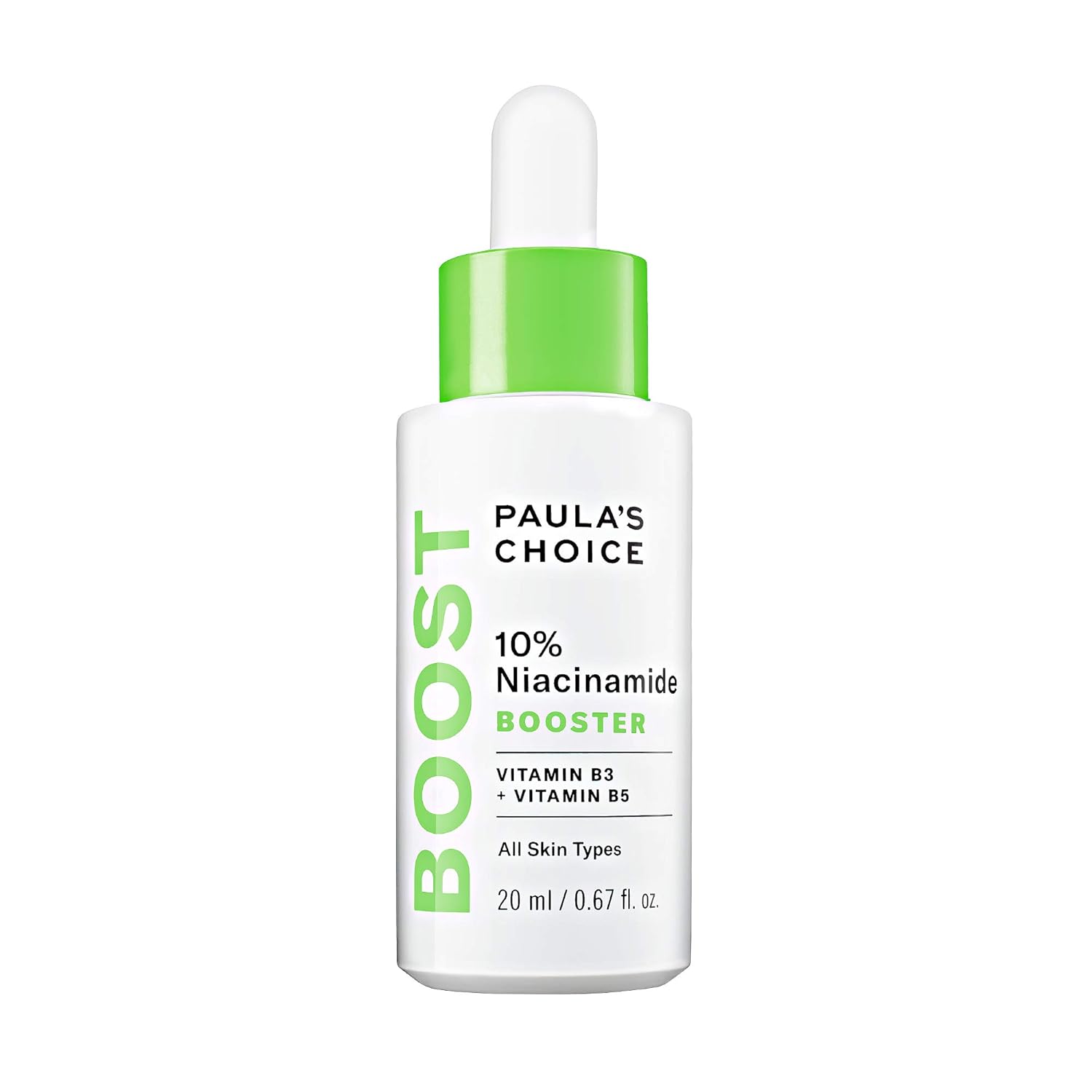
For a more sensitive skin formulation, Paula’s Choice 10% Niacinamide Booster layers beautifully with every other active in this routine.
A Non-Comedogenic Moisturizer (Morning & Night)
Every acne client I’ve worked with has skipped moisturiser at some point because their skin felt oily. Every single one made their acne worse. Actives — particularly retinoids and benzoyl peroxide — increase transepidermal water loss and compromise barrier integrity. Skip moisture replenishment and your skin ramps up sebum production, your actives become more irritating, and healing slows significantly.
Lightweight, oil-free, and non-comedogenic are the three requirements.
My recommendation:

Neutrogena Hydro Boost Water Gel is hyaluronic acid-based, absorbs completely within seconds, and sits perfectly under SPF in the morning.

For evenings, CeraVe PM Facial Moisturising Lotion contains ceramides, cholesterol, and fatty acids in a ratio that mirrors your skin’s natural barrier — with added niacinamide for overnight repair.
If retinoid dryness is significant in weeks three and four, apply moisturiser before adapalene — the sandwich method — to buffer absorption and reduce irritation without losing efficacy.
SPF 30+ Sunscreen (Morning Only — Non-Negotiable)
This step isn’t optional. Adapalene increases photosensitivity significantly. UV exposure on already-inflamed skin directly stimulates melanin production, darkening PIH marks and triggering additional inflammation that undoes the progress every other step is building. Niacinamide is working every morning to fade discoloration — every morning without SPF reverses that work entirely.
Broad-spectrum SPF 30 minimum, every morning, regardless of whether you’re going outside. UV radiation penetrates windows.
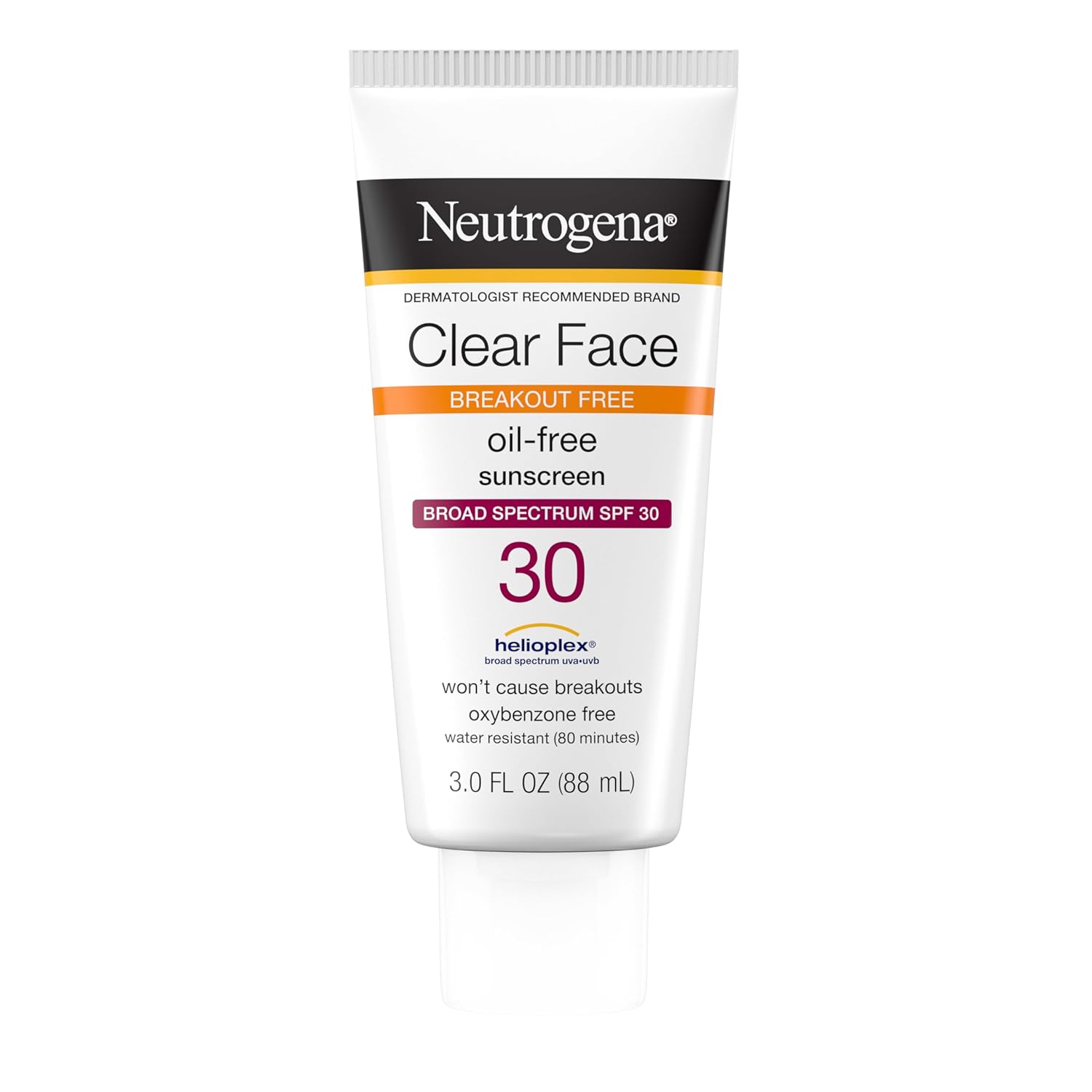
Neutrogena Clear Face Liquid Lotion SPF 30 is oil-free, non-comedogenic, and specifically formulated for breakout-prone skin — the accessible pick I recommend without hesitation.

EltaMD UV Clear Broad-Spectrum SPF 46 is the gold standard for acne-prone skin — it contains niacinamide, leaves zero white cast, and is worth every penny for anyone serious about fading PIH while protecting the skin they’re working to repair.
What Happens Week by Week
Weeks 1–2: No actives yet. Your skin may feel calmer almost immediately after switching to a gentler cleanser — Nadia noticed reduced redness within five days of the cleanser change alone. Resist every temptation to rush actives in. These two weeks are building the foundation that makes everything after them work.
Week 3: Adapalene and benzoyl peroxide are introduced. Expect mild adjustment — some dryness, possible flaking, and a temporary uptick in small breakouts as the retinoid pushes congestion to the surface. This is purging, not a reaction. Stay consistent.
Week 4: Inflammation quiets noticeably. Existing breakouts resolve faster. Fewer new ones forming. The skin starts feeling more stable. Nadia described this as the first week in years she’d gone four consecutive days without a new breakout.
Week 5: The shift becomes undeniable. PIH fading visibly. Texture improving. New breakout frequency dropping significantly. This is the week clients stop being cautiously hopeful and start actually believing it.
Week 6 (Day 45): A full skin cell cycle and a half completed under this routine. Most clients see a 60–75% reduction in active lesions, meaningfully faded PIH, and a skin texture that feels fundamentally different. This is the beginning — not the ceiling.
Expectations vs Results
At day 45, Nadia sent me that voice note. A week later, a photo — natural light, no filter, the kind she told me she hadn’t been willing to take in six years. The active breakouts were essentially gone. The PIH was fading in a way that felt, in her words, “actually real this time.”


She asked me what had been different about this routine compared to everything else she’d tried.
The answer was the same one I keep coming back to with every client: it wasn’t a miracle ingredient or a prescription formula. It was the right things, in the right order, on a barrier that was repaired enough to actually receive them. That’s the whole secret — and most of it is sitting on a shelf at your nearest drugstore.
Recommended
5 The Ordinary Products for Dry, Dull & Textured Skin
The Pore-Minimizing Skincare Routine That Made a Visible Difference
This $50 Acne Routine Using The Ordinary Cleared My Client’s Skin in 6 Weeks
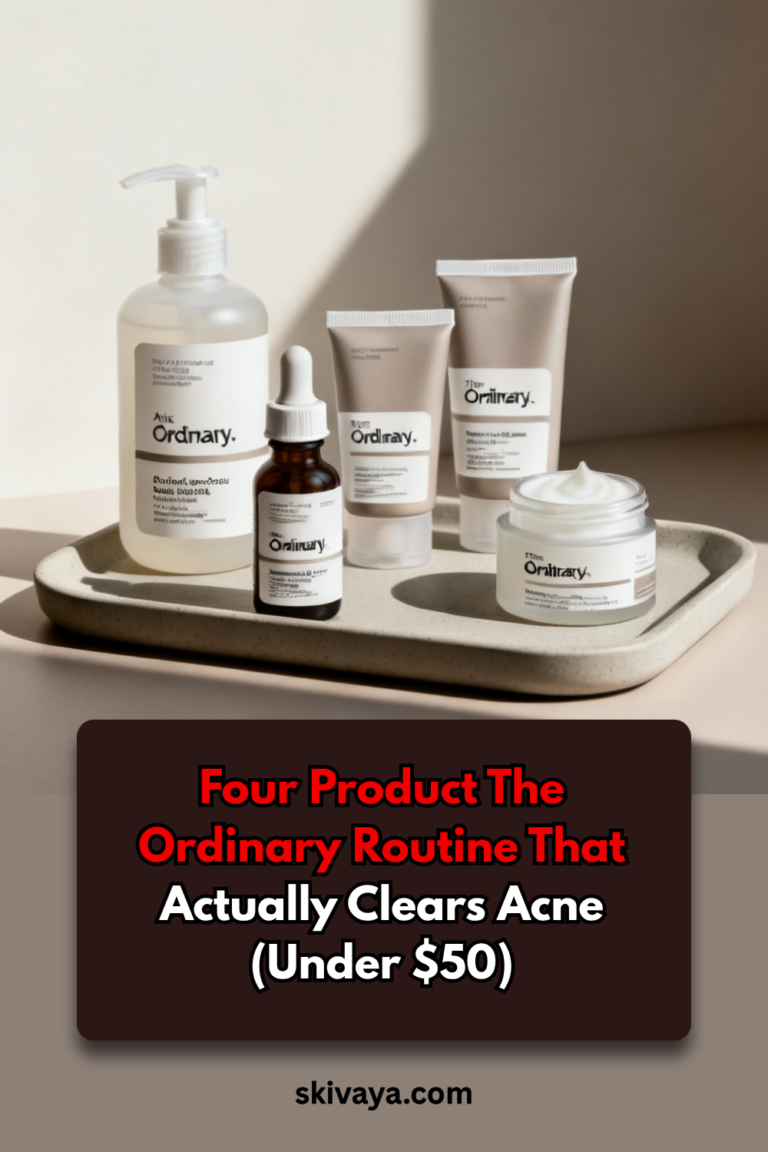
Four Product The Ordinary Routine That Actually Clears Acne (Under $50)
My Client Had Persistent Acne — This Routine Changed Everything