She messaged me on a Tuesday night with three words: “It’s actually working.”
Sarah had been my client for six weeks. Before that, she’d spent four years cycling through every acne product she could find on Instagram, TikTok, and the skincare aisle at her local pharmacy. She had a shelf full of half-used serums, a bathroom drawer of abandoned spot treatments, and skin that was somehow simultaneously oily, dry, irritated, and breaking out all at once.
She wasn’t doing anything wrong, exactly. She was just doing everything — and in the wrong order, with the wrong combinations, without understanding the science underneath.
What cleared her skin wasn’t a miracle product. It was a system. A dermatologist-approved, research-backed, precisely sequenced routine built on a handful of ingredients that are genuinely proven to work. I’m going to walk you through every single step of it today, exactly as I built it for her — and why each piece of it matters at a biological level, and bet this is the only schedule you will need.
Disclaimer
“This Blog is completely reader-supported, for any purchase you make from affiliate links on this blog we earn a small commission with no extra cost to you, This content is for informational purposes and not medical advice.”
Why Most Acne Routines Fail Before They Even Start
Before we get into the routine itself, I want to address the thing nobody talks about honestly: most over-the-counter acne routines are designed to sell you products, not to clear your skin.
They target the symptom — the visible pimple — without addressing the four underlying mechanisms that actually produce acne:
Excess sebum production from overactive sebaceous glands. Hyperkeratinization — abnormal shedding of dead skin cells inside the follicle that creates a plug. C. acnes bacterial colonization inside that plugged follicle. And inflammation, which turns a blocked pore into a red, painful lesion.
Every product in an effective acne routine needs to target at least one of these mechanisms. If it doesn’t, it’s decoration.
Sarah’s old routine had nine products and addressed exactly zero of these mechanisms adequately. We stripped it back to four core steps and two targeted actives. Her skin had its first clear week within 18 days.
The Routine: Built on Dermatological Science
Morning Routine
Step 1 — Cleanser: Stop Stripping Your Skin
The irony of most acne-focused cleansers is that they cause acne. Harsh, high-pH, heavily foaming cleansers destroy your skin’s acid mantle — the protective barrier that keeps moisture in and bacteria out. Damage that barrier and your skin responds by ramping up sebum production to compensate. More sebum means more clogged pores.
Your cleanser’s job is simple: remove overnight sebum, sweat, and any residue — nothing more. It is not supposed to treat acne. That’s not its function.
What you want is a gentle, pH-balanced cleanser sitting around 4.5–5.5, which matches your skin’s natural pH. It should be fragrance-free, non-comedogenic, and leave your skin feeling comfortable — not tight, not squeaky, not “clean.” Comfortable.
What I recommended to Sarah:

CeraVe Foaming Facial Cleanser for her combination-oily skin. It contains ceramides (which repair the skin barrier), niacinamide, and hyaluronic acid. It cleans without stripping.

For drier or more sensitive skin, the La Roche-Posay Toleriane Hydrating Gentle Cleanser is my other go-to.
One practical note: use lukewarm water, never hot. Hot water increases vascular inflammation and makes redness worse — exactly what we’re trying to reduce.
Step 2 — Active Treatment (AM): Benzoyl Peroxide for Bacterial Acne
If your breakouts are primarily inflamed — red papules, pustules, tender bumps — your morning active should be benzoyl peroxide.
Here’s why it works: benzoyl peroxide releases oxygen when it contacts the skin. C. acnes is an anaerobic bacterium — it cannot survive in an oxygenated environment. Benzoyl peroxide essentially suffocates the bacteria driving your inflamed breakouts. It also has mild comedolytic properties, meaning it helps keep follicles clear.
The critical detail most people get wrong is concentration. Higher is not better. At 2.5%, benzoyl peroxide is clinically proven to be as effective as 5% or 10% formulations — with dramatically less dryness, irritation, and barrier damage. Going straight to 10% when you’re acne-prone is one of the fastest ways to wreck your skin barrier and trigger a reactive breakout cycle.
My recommendation:

PanOxyl Acne Creamy Wash 4% used as a short-contact wash (leave on for 60–90 seconds, rinse)

Or even better La Roche-Posay Effaclar Duo as a leave-on treatment at 5.5% for more stubborn breakouts.
Important: If you’re also using adapalene at night (covered below), do not apply benzoyl peroxide and adapalene in the same step. Benzoyl peroxide oxidizes and deactivates adapalene on contact. Morning BP, evening adapalene — always separate.
Step 3 — Niacinamide Serum: The Underrated Multitasker
Niacinamide (vitamin B3) is the ingredient I wish every acne patient knew about from day one. It doesn’t get the spotlight that retinoids and benzoyl peroxide do, but at concentrations of 4–10%, the clinical evidence behind it is genuinely impressive.
It regulates sebum production by reducing the secretion rate of sebaceous glands. It strengthens and repairs the skin barrier — critical when you’re using actives that cause dryness. It reduces post-inflammatory hyperpigmentation (the dark marks left after acne heals), which for many people is as distressing as the acne itself. And it calms the redness and inflammation around active breakouts.
For Sarah, the niacinamide was what visibly changed the tone and texture of her skin. Her active breakouts were responding to the adapalene and BP, but it was the niacinamide that made her skin look healthier — less red, more even, less congested.
My recommendation:

The Ordinary Niacinamide 10% + Zinc 1% — excellent efficacy at an accessible price point. The zinc addition helps further regulate sebum.
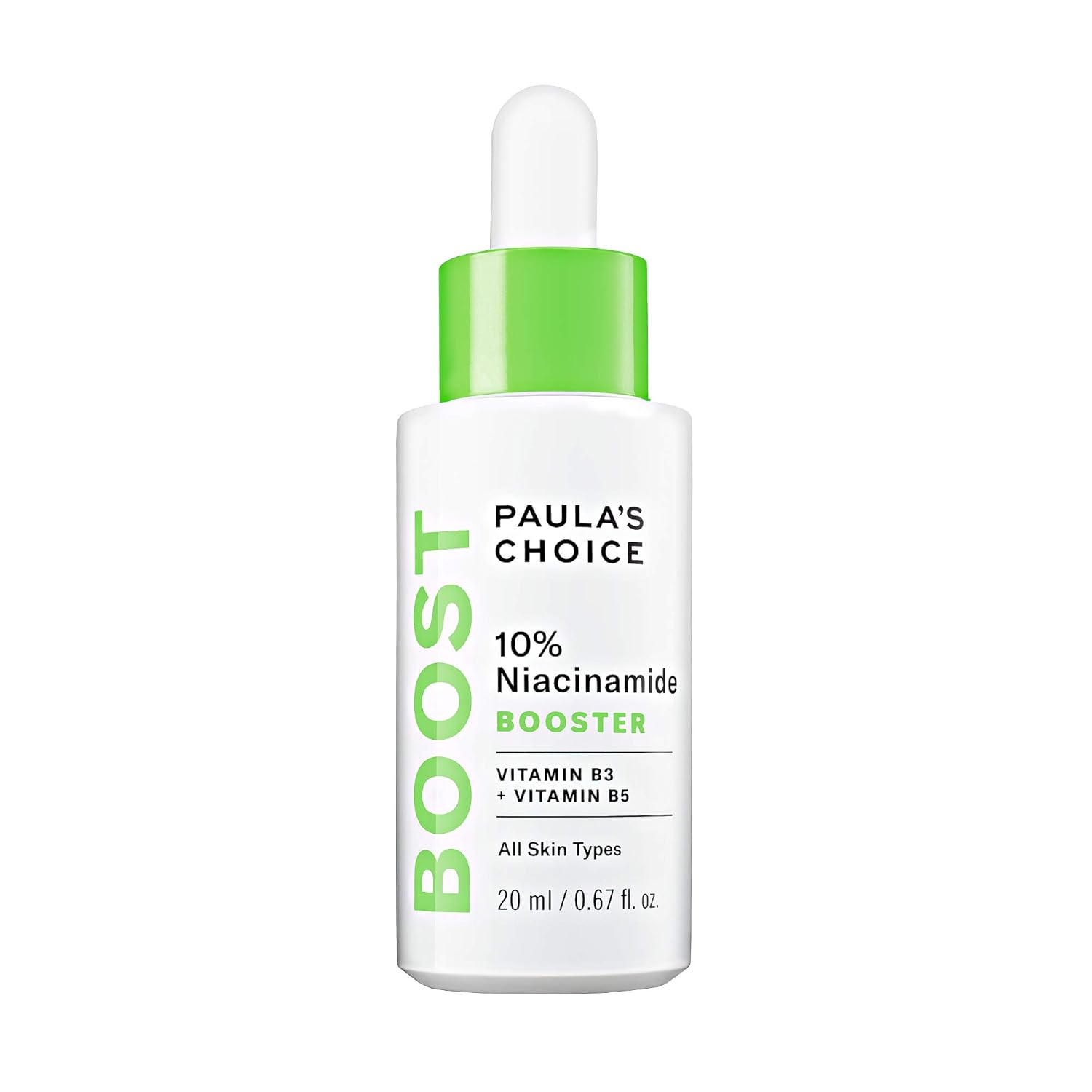
For sensitive skin, Paula’s Choice 10% Niacinamide Booster is more gently formulated and layers beautifully with other actives.
Apply after cleansing, before moisturizer. Give it 60 seconds to absorb before the next step.
Step 4 — Moisturizer: You Cannot Skip This
Every acne patient I’ve ever coached has, at some point, skipped moisturizer because their skin felt oily. Every single one. And every single one made their acne worse because of it.
Acne actives — particularly retinoids and benzoyl peroxide — compromise your skin barrier. A compromised barrier loses water rapidly (transepidermal water loss), triggers reactive sebum overproduction, and becomes more susceptible to bacterial colonization. Moisturizing while using actives is not optional. It’s part of the mechanism.
What you need is lightweight, oil-free, and non-comedogenic. No heavy creams, no occlusives loaded with coconut oil or cocoa butter. Just something that replenishes moisture and supports barrier function without blocking pores.
My recommendation:

Neutrogena Hydro Boost Water Gel — hyaluronic acid-based, absorbs instantly, zero greasiness, works beautifully under sunscreen.
Step 5 — SPF: The Step That Protects Everything Else You’re Doing
This is the step I’m most strict about, because skipping it genuinely undoes the work of every other step.
Adapalene increases photosensitivity — your skin is more vulnerable to UV damage when you’re using a retinoid. UV exposure on already-inflamed skin directly stimulates melanin production, darkening post-inflammatory hyperpigmentation and making those marks take months longer to fade. You’re using niacinamide and possibly azelaic acid to fade dark marks — and then erasing all of that progress every morning you walk outside without SPF.
Beyond the PIH issue: UV damage itself triggers inflammation in skin cells. For acne-prone skin, that baseline UV-induced inflammation makes breakouts more likely.
Minimum SPF 30, broad-spectrum, every morning, 365 days a year regardless of cloud cover or indoor plans.
My recommendation:

EltaMD UV Clear Broad-Spectrum SPF 46 is the gold standard for acne-prone skin — it contains niacinamide, is completely non-comedogenic, and doesn’t cause breakouts even for the most reactive skin.

For a more budget-friendly option, La Roche-Posay Anthelios Invisible Fluid SPF 50+ is lightweight, non-greasy, and leaves zero white cast.
Evening Routine
Step 1 — Double Cleanse: Remove the Day Properly
At night, cleansing matters more. You’re removing sunscreen, pollution, makeup, and a full day’s worth of sebum before applying your actives — and any of those things sitting on the skin while adapalene works will reduce its efficacy.
A double cleanse is the professional approach: first pass with a micellar water or gentle cleansing oil to dissolve SPF and surface debris, second pass with your regular gentle cleanser to clean the skin itself.
My recommendation for first cleanse:

Bioderma Sensibio H2O Micellar Water — dermatologist-favorite, alcohol-free, suitable for even the most reactive skin. Apply on a cotton pad, no scrubbing required.
Follow with the same gentle cleanser from your morning routine.
Step 2 — Niacinamide Serum (Again)
Yes, twice daily. Morning niacinamide addresses daytime sebum regulation and provides antioxidant support. Evening niacinamide works overnight when your skin is in active repair mode — this is when the PIH-fading and barrier-repair properties are most effective.
Same product, same application method. Apply after cleansing, let it absorb, then move to your retinoid.
Step 3 — Adapalene 0.1%: The Real Engine of This Routine
Adapalene is a third-generation topical retinoid. Unlike older retinoids like tretinoin, it’s receptor-selective — it binds specifically to the retinoic acid receptors involved in cell turnover and sebaceous regulation, without triggering the widespread skin irritation that makes tretinoin difficult for many people to use.
What it does at a cellular level: it normalizes the hyperkeratinization process inside follicles. It prevents the abnormal clumping of dead skin cells that forms the initial comedone — the root structure from which all acne types develop. No comedone formation, no pore blockage. No pore blockage, no C. acnes colonization. No colonization, no inflammation. No inflammation, no pimple.
This is why adapalene doesn’t just treat existing acne — it prevents new acne from forming at the earliest possible stage. It’s the only OTC ingredient that works this way.
The most important application rule: pea-sized amount, entire face — not just on spots. Adapalene is a preventive treatment. Spot-treating with it is like using an umbrella to cover only your left shoulder.
My recommendation:
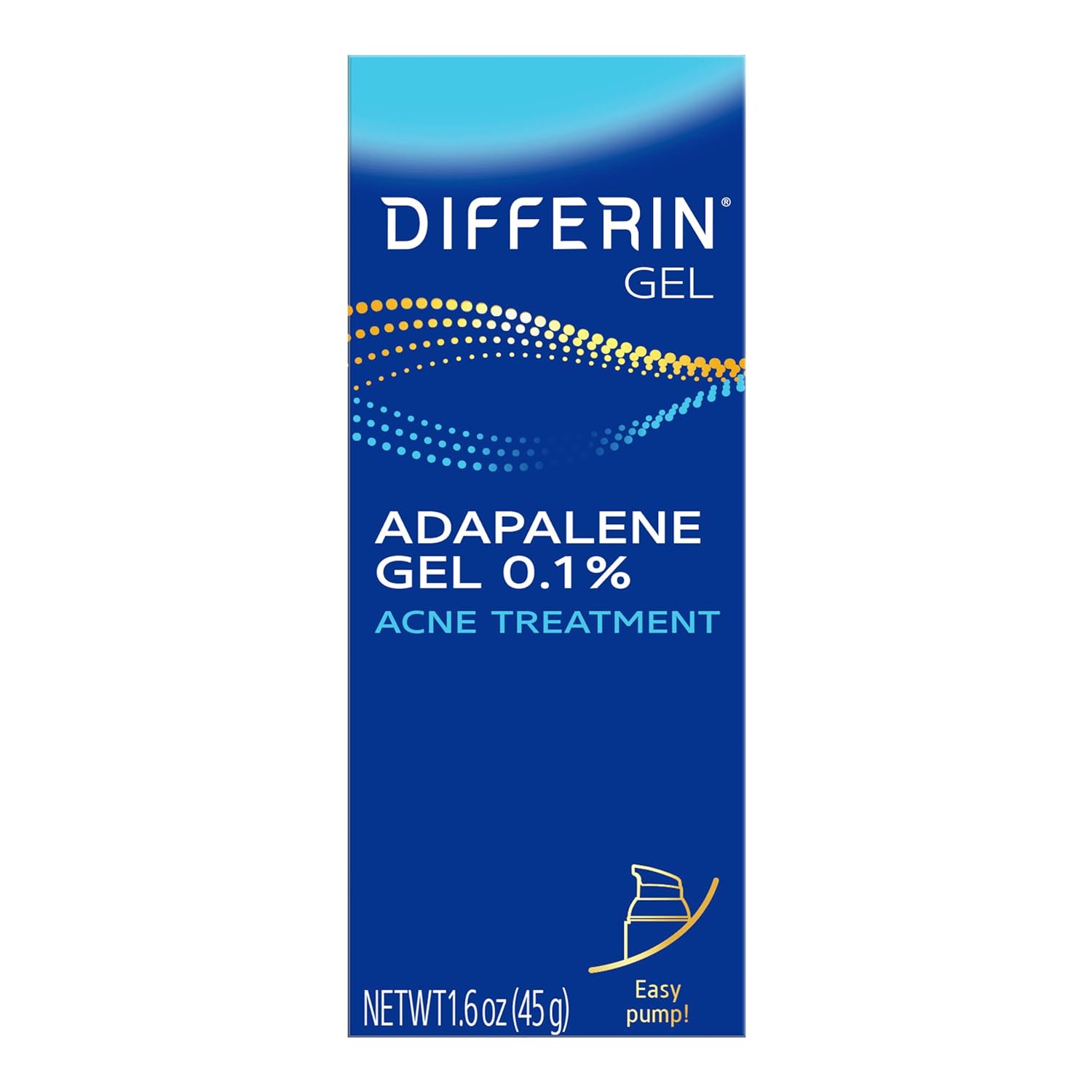
Differin Gel 0.1% — the original adapalene brand, now available over the counter, clinically proven in multiple large-scale studies. This was the centerpiece of Sarah’s routine.
For the first two weeks: apply every other night to minimize adjustment irritation. From week three onward, nightly application is well-tolerated by most skin types.
Apply 20 minutes after cleansing on dry skin (damp skin increases retinoid absorption and can intensify irritation).
Step 4 — Ceramide Moisturizer: Lock In, Protect, Repair
Your evening moisturizer has a specific job when you’re using adapalene: it buffers the retinoid’s potential for irritation and replenishes the ceramides your skin barrier needs to stay intact during the cell turnover process the retinoid is accelerating.
Apply it generously after adapalene. If you experience significant dryness or peeling in the first two weeks, you can apply moisturizer before adapalene (“sandwich method”) — this reduces retinoid absorption slightly and dramatically reduces irritation while your skin adjusts.
My recommendation:

CeraVe PM Facial Moisturizing Lotion — ceramides, cholesterol, and fatty acids in a ratio that mirrors your skin’s natural barrier composition. Clinically proven to restore barrier function. It’s what I recommended to Sarah, and it’s what I recommend to almost every coaching client using a retinoid.
The Visual Breakdown
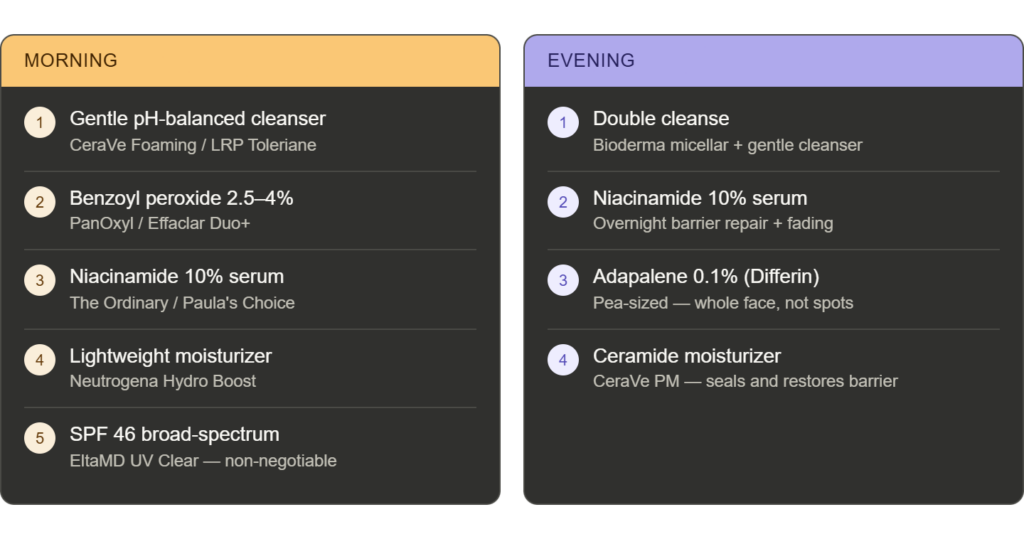
What to Expect Week by Week
Week 1 — The adjustment phase. Your skin may feel drier than usual. If you’ve started adapalene, you might notice slight flaking around the nose and chin. A small uptick in breakouts is possible and normal — adapalene is accelerating the surfacing of clogged material that was already forming under the skin. Don’t panic. Don’t quit. This is the process.
Week 2 — The shift begins. Inflammation starts quieting down. Existing pimples resolve faster. Fewer new breakouts are forming, though you may not notice this consciously yet. Your skin is starting to feel more balanced and less reactive. This is the niacinamide working.
Week 3 — The turn. This is the week most clients message me. Sarah did. Something clicks — the skin looks visibly calmer, texture improves, and the reduction in new breakouts becomes undeniable. PIH marks may start lightening slightly. You’ll want to keep going.
Week 4 — The result. A full 28-day skin cell cycle has now completed under this routine. Most people using this system consistently see a 50–70% reduction in active lesions by the end of week four. The foundation has been laid for the skin to continue improving through weeks five, six, and beyond.
Week 3–4 Add-Ons (Once Your Barrier is Stable)
These two additions accelerate results once the foundation is established:
Azelaic acid 10%. An ingredient that does three things at once: inhibits C. acnes growth, reduces inflammation, and gently brightens post-inflammatory hyperpigmentation by inhibiting tyrosinase — the enzyme responsible for excess melanin production in previously inflamed skin.

The Ordinary Azelaic Acid Suspension 10% is affordable and highly effective. Use it in the morning, after niacinamide, before moisturizer.
Salicylic acid 2% BHA toner. Salicylic acid is oil-soluble — one of the very few exfoliants that can penetrate inside the pore lining and dissolve the sebum-dead cell mixture that blocks follicles. Used two to three times per week (not on the same nights as adapalene in the early weeks), it keeps pores continuously cleared between retinoid applications.

Paula’s Choice Skin Perfecting 2% BHA Liquid Exfoliant is the benchmark product in this category — well-formulated, reliably effective, and worth every penny.
One More Thing About Sarah
At her eight-week check-in, she sent me a side-by-side photo. Left side: day one, congested and inflamed across both cheeks and her jawline, PIH marks from years of previous breakouts across her chin. Right side: eight weeks in. Active breakouts were essentially gone. The PIH was about 60% faded.
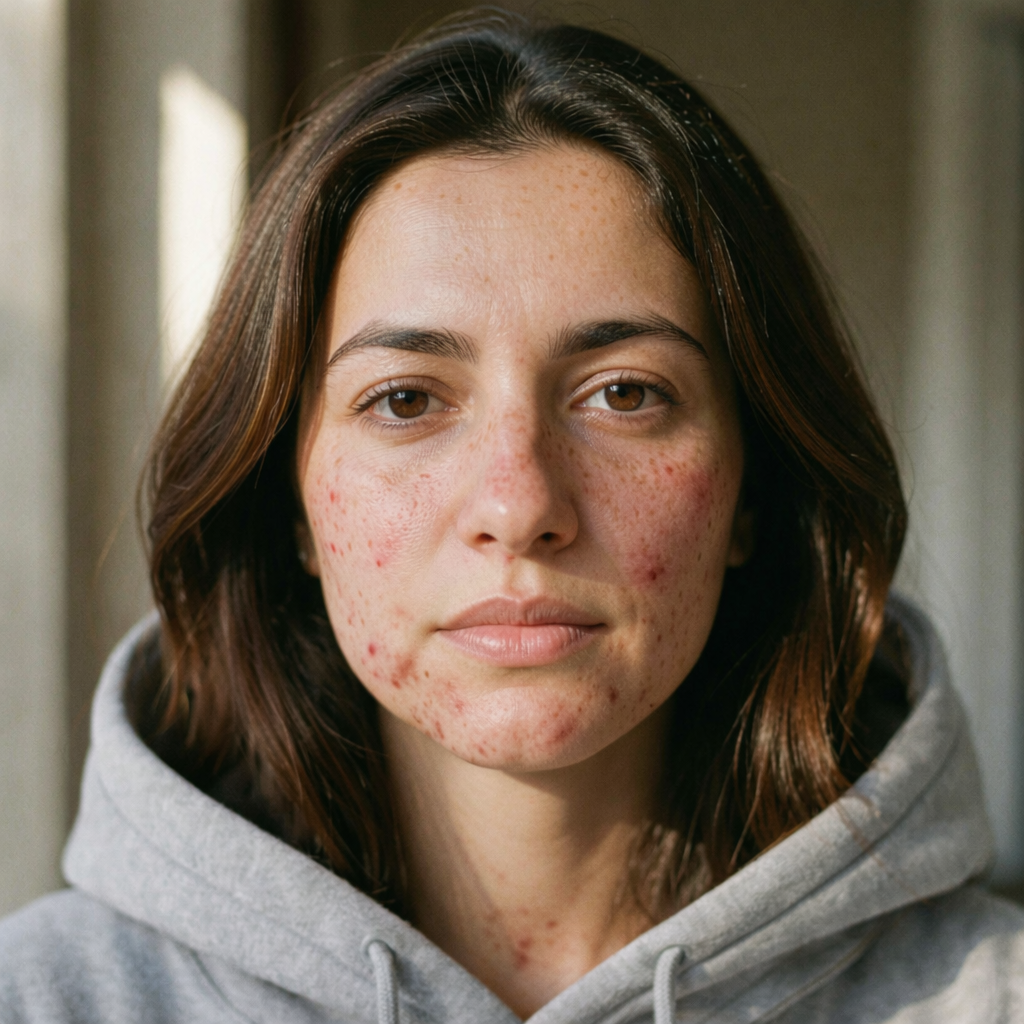

She asked me why no one had ever just given her a specific list of what to buy and in what order before. I didn’t have a great answer. There’s a lot of noise in the skincare space — a lot of beautiful packaging and influencer endorsements and trending ingredients that make for compelling content but don’t translate into clearer skin. What actually clears acne is understanding the mechanism, targeting it with the right tools, giving those tools time to work, and not interfering with the process while it’s happening.
That’s the whole system. It’s not complicated. It just has to be done correctly.
Recommended
My Client Had Persistent Acne — This Routine Changed Everything