Let me tell you about Shreya.
She came to me convinced she had “bad skin” — her words. Thirty-one years old, a software engineer who spent most of her day under air conditioning, and a face that looked perpetually tired regardless of how much she slept. Dry patches around her nose. A dullness that no highlighter could fix. Texture that made foundation look cakey within an hour of application.
“I’ve tried moisturizing,” she told me. “It doesn’t work.”
It wasn’t that moisturizing didn’t work. It was that she was moisturizing wrong — and missing two steps that were the actual problem. Eight weeks later, the texture was gone. The dullness was gone. She texted me: “I finally look like I’ve slept.”
Here’s what changed.
Disclaimer
“This Blog is completely reader-supported, for any purchase you make from affiliate links on this blog we earn a small commission with no extra cost to you, This content is for informational purposes and not medical advice.”
Why Dry, Dull, Textured Skin Isn’t a Hydration Problem — It’s a System Problem
Slapping on a heavy moisturizer and hoping for the best is the number one mistake I see with dry and textured skin. Here’s why it rarely works alone.
Dehydration and dryness are not the same thing. Dehydration is a lack of water in the skin cells. Dryness is a lack of oil (lipids) in the barrier. You can have oily and dehydrated skin simultaneously — which is why some people moisturize constantly and still look dull. If you’re not addressing both, you’re only solving half the problem.
Dead skin cell buildup blocks everything. Dry, textured skin has a sluggish cell turnover rate. Dead cells accumulate on the surface, creating rough texture and preventing any moisturizer from actually penetrating where it needs to go. You’re essentially moisturizing a wall. A compromised barrier can’t hold onto hydration. Even if water gets in, a damaged skin barrier lets it evaporate straight back out — a process called transepidermal water loss (TEWL). Without barrier repair, every other step is temporary.
Fix the system. The products below do exactly that — in the right order.
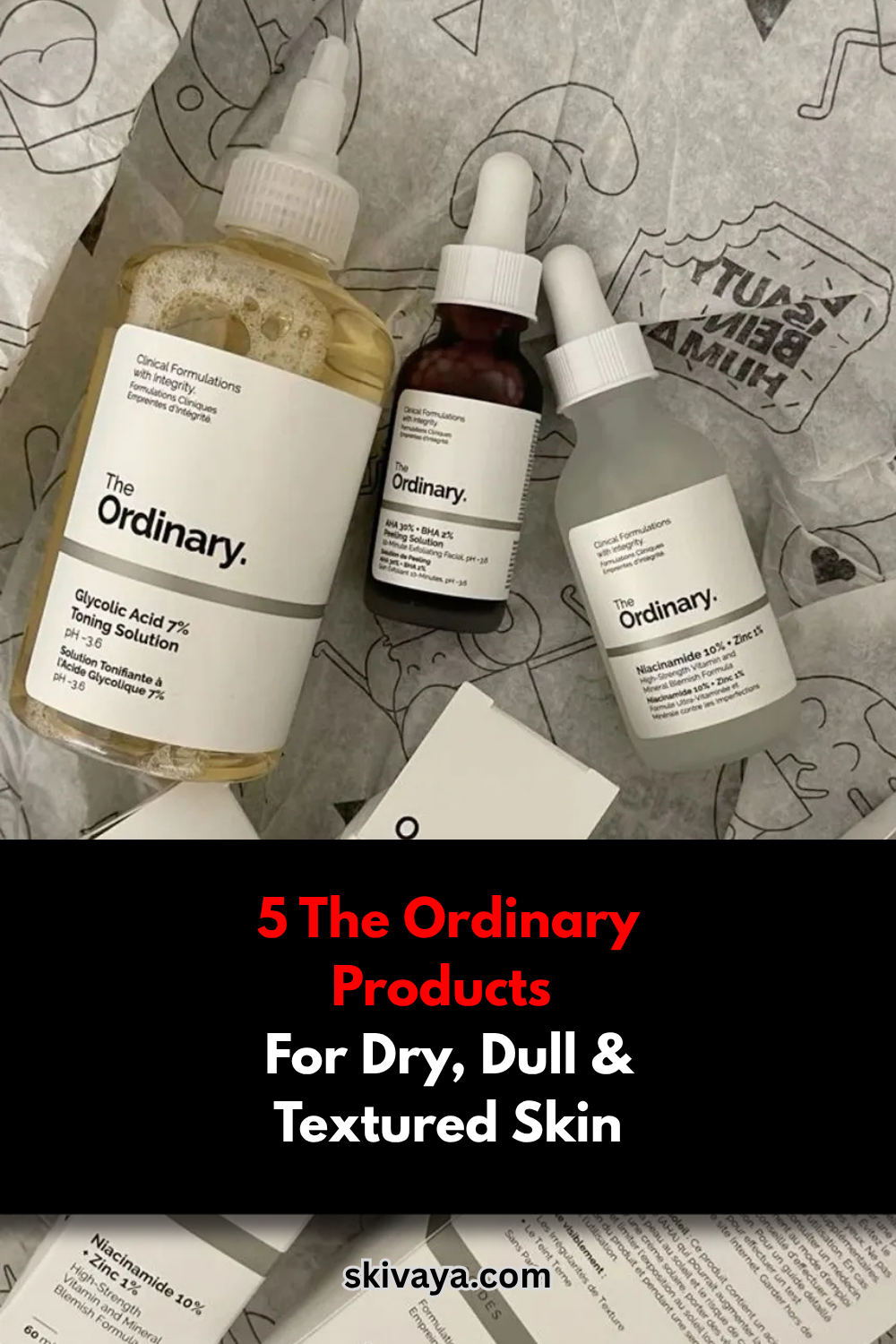
The 5-Product The Ordinary Routine for Dry, Dull & Textured Skin
Step 1 — The Ordinary Glucoside Foaming Cleanser | AM + PM
The cleanser most people with dry skin are using is actively worsening their barrier. Sulfate-heavy foaming cleansers strip the lipids holding your skin barrier together — and a broken barrier means water loss, tightness, and heightened sensitivity to everything that follows.

The Ordinary Glucoside Foaming Cleanser uses gentle, plant-derived glucoside surfactants that lift dirt and excess oil without disturbing the lipid layer. It maintains your skin’s natural pH (ideally 4.5–5.5) rather than alkalizing it, which is what opens the door for irritation and transepidermal water loss.
Shreya had been using a popular charcoal cleanser every day. Within a week of switching, the tightness after washing disappeared entirely. That one swap changed how every product that followed performed.
Step 2 — The Ordinary Lactic Acid 5% + HA | PM Only (3x per week to start)
Dry and textured skin cannot be moisturized into smoothness. The dead cell buildup sitting on the surface needs to be dissolved first — and this is the step most people with dry skin skip entirely out of fear of irritation.
Lactic acid is an alpha-hydroxy acid (AHA) that chemically dissolves the bonds between dead skin cells, allowing them to shed without the physical trauma of a scrub. At 5%, it’s the gentlest effective concentration — strong enough to resurface texture and stimulate collagen production, mild enough that even reactive skin can tolerate it with a proper introduction.

What makes lactic acid specifically ideal for dry skin over other AHAs (like glycolic) is its humectant property — it draws moisture into the skin as it exfoliates. You’re simultaneously clearing the surface and hydrating it. Glycolic acid doesn’t do that.
The added hyaluronic acid in this formula cushions the exfoliation further, making it the most forgiving entry point into chemical exfoliation for dry skin types.
Step 3 — The Ordinary Hyaluronic Acid 2% + B5 | AM + PM
This step is where most people make a critical mistake: they apply hyaluronic acid to dry skin. Hyaluronic acid is a humectant — it pulls moisture from its environment into your skin. Applied onto dry skin in a dry environment, it pulls moisture out of your skin instead. The result? Tighter, drier skin than before.
Apply this immediately after cleansing, onto damp skin. Pat your face dry to about 70% — still slightly damp — and apply the serum into that moisture. Then seal it with moisturizer within 60 seconds before the water evaporates.

The 2% hyaluronic acid here works across multiple molecular weights, meaning it hydrates at different skin depths simultaneously — surface plumping and deeper cellular hydration at the same time. The added Vitamin B5 (panthenol) accelerates skin barrier repair and reduces surface sensitivity, making it particularly effective for dry skin that’s also reactive.
Shreya called this “the step that finally made my skin feel like skin again” — and she wasn’t wrong. Plumped, hydrated cells are the foundation every other product builds on.
Step 4 — The Ordinary 100% Plant-Derived Squalane | PM (mixed with moisturizer or applied after)
Here’s what no one tells you about dry skin: most lightweight moisturizers fix dehydration but completely ignore the lipid deficiency. Your barrier is held together by lipids — fats — and if they’re depleted, water will continue escaping no matter how much you hydrate.
Squalane is a lipid that’s structurally almost identical to your skin’s own sebum, which means your skin absorbs it without resistance and uses it directly for barrier repair. It’s non-comedogenic, odorless, and stable — no oxidation, no irritation risk.

Two or three drops mixed into your evening moisturizer creates an occlusive-like seal that dramatically reduces TEWL overnight. This is the step that converts temporary hydration into actual, lasting barrier repair. Without it, dry skin clients typically plateau — they feel better during the day but wake up dry again by morning.
Step 5 — The Ordinary Natural Moisturizing Factors + HA | AM + PM
The final step — and the one that holds everything else together.
Natural Moisturizing Factors (NMF) are the compounds your skin naturally produces to maintain hydration: amino acids, fatty acids, urea, and hyaluronic acid. In chronically dry and stressed skin, NMF production is depleted, which is why the skin loses its ability to self-regulate moisture over time.
This moisturizer replenishes NMF directly, working with your skin’s biology rather than sitting on top of it. It’s lightweight enough that it doesn’t block the squalane layer when used in the right order, and it doesn’t contain any fragrance, silicones, or occlusive waxes that commonly trigger sensitivity in already-compromised skin.

Applied after your hyaluronic acid (and squalane in the evening), it seals the hydration in and rebuilds the barrier compounds that make long-term dryness recovery possible.
This isn’t just a moisturizer. It’s a delivery system for the ingredients your skin has stopped producing on its own.
What to Expect, Week by Week
Week 1: Tightness after cleansing disappears first. Skin starts to feel less reactive. You may experience very mild flaking as the lactic acid begins breaking down the dead cell buildup — this is the process working, not damage. Don’t add products.
Week 2: Texture begins visibly smoothing. Foundation and makeup sit differently on the skin — less settling into dry patches. Dullness starts to lift. The hyaluronic acid plumping is now cumulative rather than temporary.
Week 3: This is when most people have their “oh” moment. Skin looks genuinely luminous in natural light. The rough patches that persisted through years of moisturizing are gone or dramatically reduced. The barrier is stabilizing — less sensitivity, less reactivity.
Week 4: Lasting change. The skin’s own moisture-retention capacity improves because the barrier is repaired, not just temporarily hydrated. Shreya described her skin at week four as “something I actually want to show people” — and that shift is exactly what barrier repair looks like clinically.
Quick Reference: The Full Routine
| Product | Purpose | When |
|---|---|---|
| Glucoside Foaming Cleanser | Barrier-safe cleanse | AM + PM |
| Lactic Acid 5% + HA | Chemical exfoliation, resurfaces texture | PM only (3x/week) |
| Hyaluronic Acid 2% + B5 | Deep hydration, barrier repair | AM + PM |
| 100% Plant-Derived Squalane | Lipid replenishment, seals moisture | PM only |
| Natural Moisturizing Factors + HA | Barrier rebuilding, locks hydration | AM + PM |
Recommended
5 The Ordinary Products for Dry, Dull & Textured Skin
The Pore-Minimizing Skincare Routine That Made a Visible Difference
This $50 Acne Routine Using The Ordinary Cleared My Client’s Skin in 6 Weeks
The Best Sunscreens for Oily Skin (No White Cast, No Breakouts)
Four Product The Ordinary Routine That Actually Clears Acne (Under $50)